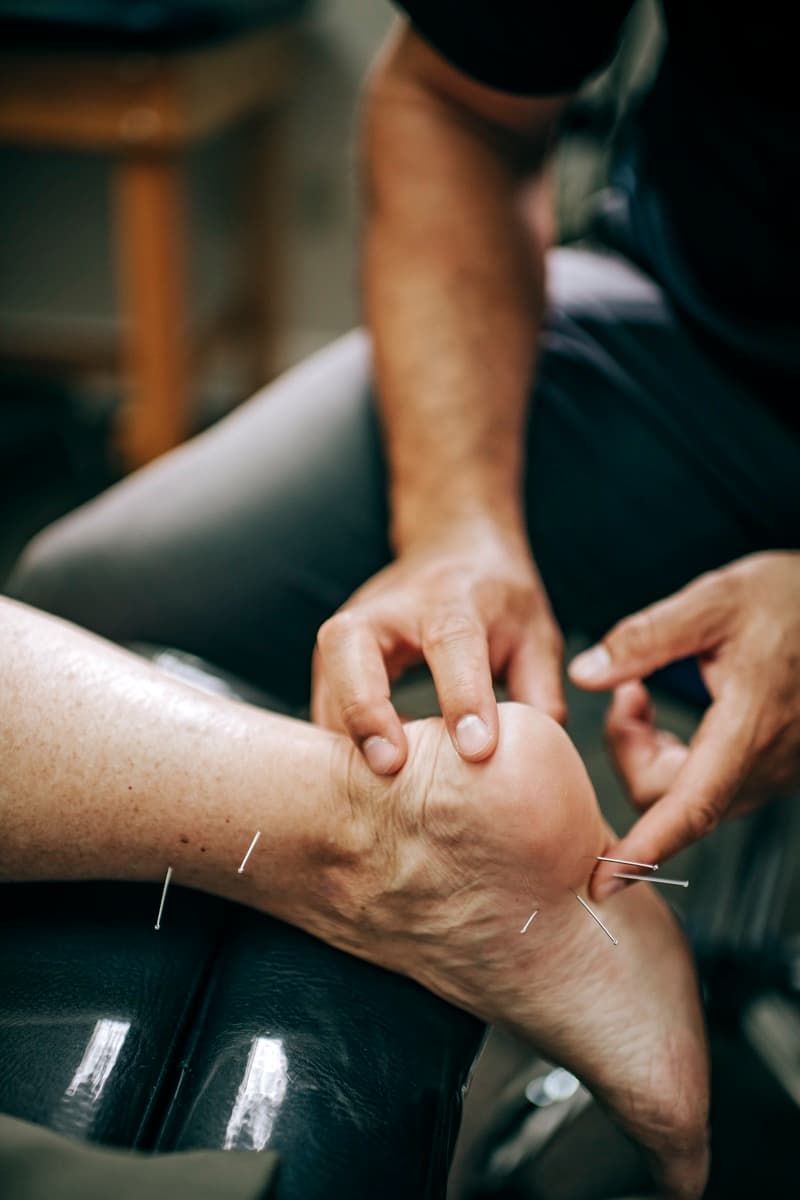
"Isn't that just acupuncture?" It's the most common question we get when patients see dry needling on our services list. The short answer: no. While both techniques use thin, solid filament needles, the philosophy, training, and application are fundamentally different.
Dry Needling: Western, Evidence-Based
Dry needling is rooted in modern musculoskeletal science. A trained practitioner inserts a thin needle directly into a myofascial trigger point — a tight, irritable knot within a muscle. The needle creates a "local twitch response," which is an involuntary contraction followed by immediate relaxation of the muscle fibers.
This releases tension, improves blood flow to the area, and reduces the chemical irritants that cause pain. Research published in the Journal of Orthopaedic & Sports Physical Therapy has shown dry needling to be effective for:
- Chronic neck and back pain
- Tension headaches and migraines
- Shoulder impingement
- IT band syndrome
- Plantar fasciitis
Acupuncture: Eastern, Traditional
Acupuncture is based on Traditional Chinese Medicine (TCM) and has been practiced for over 2,000 years. Needles are placed along meridians — energy pathways believed to carry "qi" (life force) through the body. The goal is to restore balance and promote the body's natural healing response.
Acupuncture is typically used for broader systemic issues: stress, insomnia, digestive problems, and general wellness. Sessions tend to be longer, with needles left in place for 20-30 minutes.
Which One Is Right for You?
If you have a specific musculoskeletal complaint — a stiff neck, a shoulder that won't loosen up, chronic headaches from tight muscles — dry needling is likely the more targeted option. It works best as part of a comprehensive treatment plan that includes chiropractic adjustments and rehabilitation exercises.
At Mayfield Advanced Chiropractic, Dr. Mayfield and Dr. Taylor are trained in dry needling techniques and integrate them into individualized treatment plans. The needles are single-use, sterile, and much thinner than a hypodermic needle — most patients feel minimal discomfort.
If you're dealing with muscle pain that hasn't responded to stretching or massage, dry needling might be the missing piece.